Cats nine lives? Death defying felines
The belief that a cat somehow cheats death more often than other animals is one of those ideas that slips easily into conversation yet has surprisingly deep roots. Children accept cats nine lives as fact, journalists lean on it when describing resilient politicians and pet owners reach for it whenever a favourite moggy returns unscathed from a misjudged leap. The claim that cats enjoy multiple lives may sound whimsical, but it hints at serious questions: why did this particular species acquire such a reputation, and why has the number of supposed lives proved so negotiable across cultures?
Modern explainers tend to start with the obvious. Cats really do survive incidents that would finish many creatures of similar size, thanks to supple spines, keen balance and a disconcerting ability to twist in mid‑air and land on their feet. Owners see this, puzzle over it, and then wrap their experience in numbers and stories. Over centuries those stories have been embroidered by religion, folklore and literature, producing a tangle of explanations that ranges from ancient Egyptian reverence for feline deities to tales of spectral black cats guarding Highland graves.
The result is a proverb with global reach but local variations. In some places cats are awarded nine lives, in others seven or even six, yet the underlying sentiment is the same: this animal appears to enjoy more chances than most. As one wry observer put it, “whether it’s six, seven or nine lives, it’s never enough” – a line that captures both human fondness for cats and our reluctance to contemplate the day when even their luck will run out.
Cats nine lives? Origin, usage & truth behind the popular saying
Cats nine lives – Origins of the saying

No animal has inspired more casual metaphysics than the domestic cat. The claim that of cats nine lives sounds like a superstition from the darker corners of the internet – such as Britannica – yet it is much older than that.
An English proverb from at least the early modern period runs: “A cat has nine lives. For three he plays, for three he strays, and for the last three he stays,” neatly mapping feline existence onto youth, mid‑life adventure and sedate old age.
The rhyme almost certainly travelled by word of mouth long before it reached the page, reflecting how frequently people saw cats escape scrapes that would have killed a less supple species.
The roots reach back further. In ancient Egypt cats were linked to deities such as Bastet and Atum‑Ra and treated less as household animals than as emissaries of the divine. One myth describes Atum‑Ra manifesting as a great tom who fathers eight other gods, a tidy bundle of nine lives in one body which modern commentators see as an appealing proto‑version of the proverb.
Celtic tales of the Cat Sìth, a spectral black cat that may be a witch in her ninth and final transformation, add another thread and place the multi‑life cat squarely in the realm of magic and metamorphosis.
By Shakespeare’s time, the idea was so familiar that Mercutio can taunt Tybalt in Romeo and Juliet as “good king of cats” and threaten to take “one of your nine lives” without pausing to explain the joke.
As Country Life notes, if a throwaway line in a tragedy still resonates four centuries on, it is because it captured something audiences already knew: cats seem uncommonly hard to finish off.
Cats nine lives – Cultural variations around the world
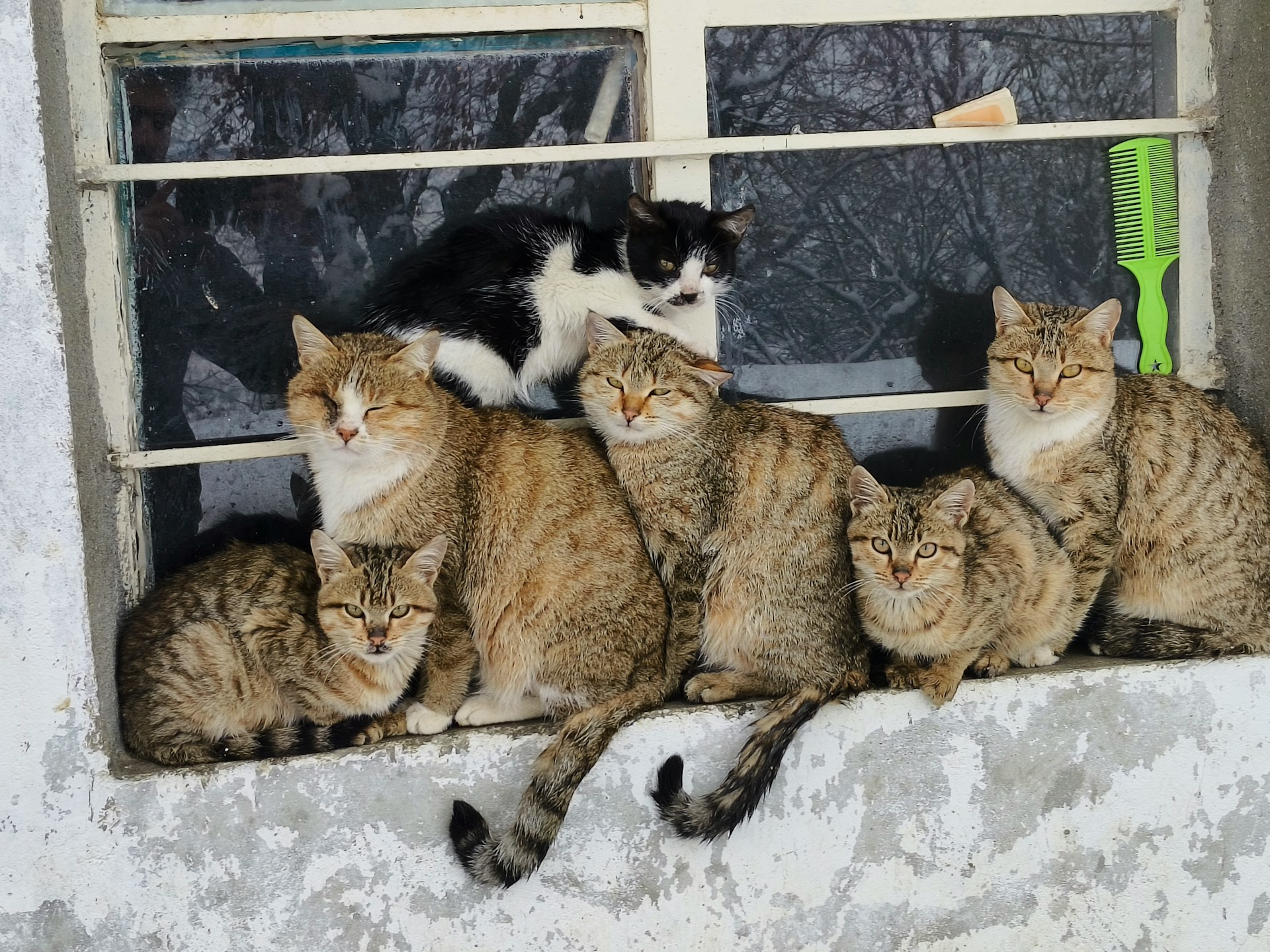
Nine is not the only figure in circulation. Ask around Europe and the Middle East and you quickly discover that the cats nine lives allowance is oddly negotiable.
In Spain and much of Latin America, the phrase is that someone has “siete vidas como los gatos” – seven lives like cats – deployed whenever a politician, relative or football club extricates itself from disaster yet again. Per Rosetta translation then Polish, Italian, German and Greek speakers also tend to grant cats seven lives, a reflection of the long association between seven and religious perfection.
Move east and the arithmetic shifts once more. Several Arabic‑speaking and Turkish traditions give cats only six lives, proof that even miracles can be subject to regional budget cuts.
Yet comparative accounts of the proverb note that the underlying idea hardly changes: cats everywhere are thought to be preternaturally resilient; it is only the culturally favoured “lucky” number that varies.
A linguist summarised the situation pithily when reviewing a Brazilian television series: “Some cats have seven lives, not nine,” she wrote, observing that Greek and Brazilian viewers would simply plug their own mystical number into the familiar myth.
For house sitters moving between cities, this means the same balcony‑hopping tabby will be credited with six, seven or nine spare chances depending on the local language. The varied tallies tell you less about feline biology than about human numerology and the urge, across cultures, to express admiration for a creature that keeps turning up after it was surely done for.
Cats nine lives – Symbolism of the number nine

Why, then, do English‑speaking countries cling to nine when explaining cats nine lives? Part of the answer lies in arithmetic with ambitions. In many traditions nine is the number of completion: three groups of three, a “trinity of trinities” as one survey of religious symbolism puts it.
Ancient Greece had nine Muses; Norse myth divided the cosmos into nine worlds; Christian and Hindu writers alike have used nine to signal a state of spiritual fullness rather than mere quantity.
Modern numerologists, usually not the most restrained commentators, describe nine as standing for wisdom, closure and the point at which one cycle ends and another begins.
Encyclopaedia entries on the proverb note that early Anglo‑Saxon law codes and poems often organise things in nines, from penalties to waiting periods, suggesting that the number was already a mental habit when later speakers met agile cats.
Overlay that numerology on a creature which appears to rebound from accidents and disappearances and you get an elegant metaphor. To give a cat nine lives is to say not only that it survives but that it seems to be reborn, each escape rounding off one chapter and beginning another.
Cats nine lives – The cat’s real‑life resilience
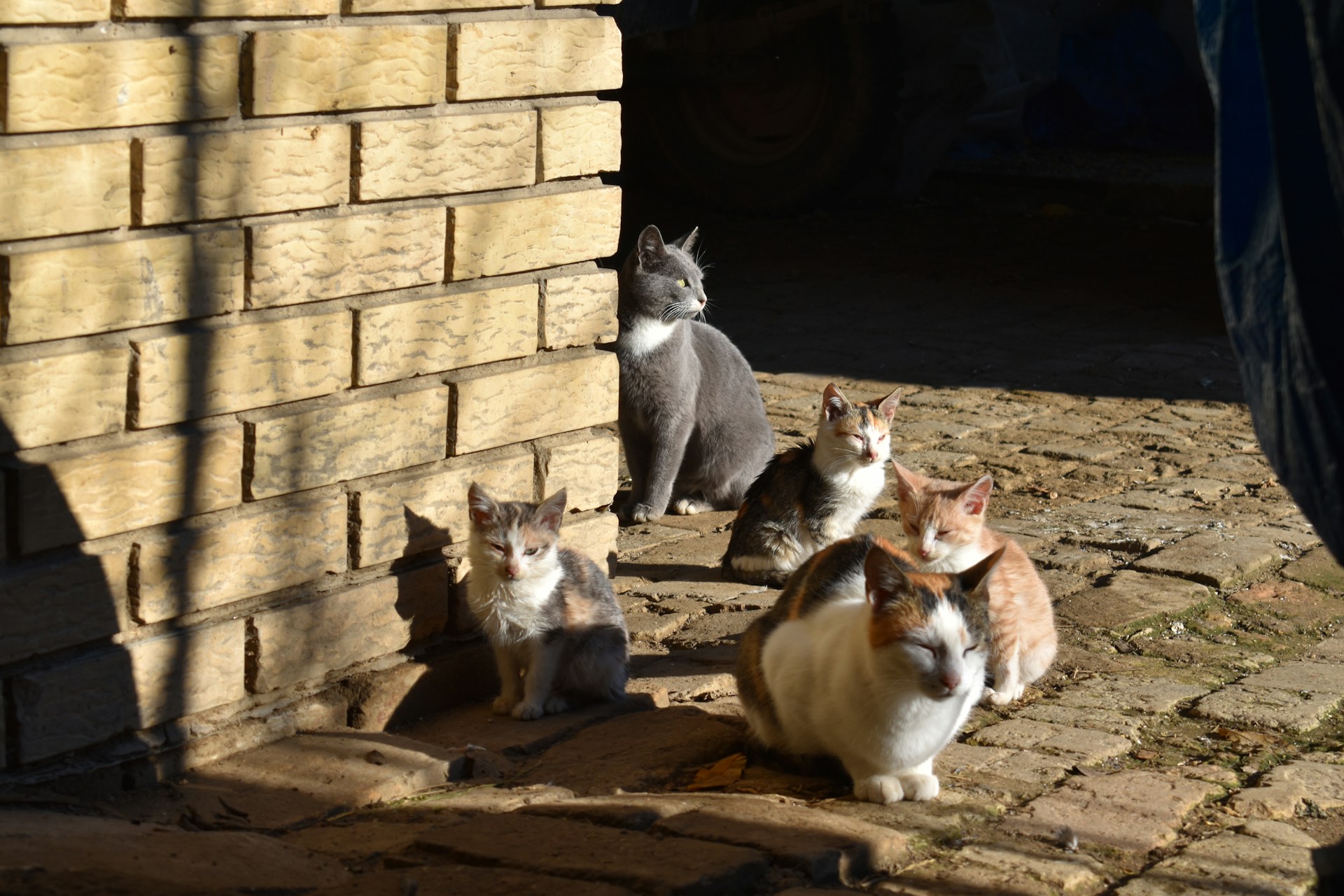
The myth would never have spread so far if cats were not genuinely better than most at sidestepping death.
Their skeletons are light, their spines extraordinarily flexible and their tails act as counterweights, helping them balance on railings that would defeat a human tightrope‑walker. Inside the skull, a sensitive vestibular system tells the brain which way is down, allowing the body to twist in mid‑air so that feet point ground‑wards before landing – the celebrated righting reflex.
Veterinary texts comparing cats with dogs note that felines can rotate their front and back halves independently and spread their limbs to increase drag, creating a furry approximation of a parachute.
Studies of “high‑rise syndrome” – the unlovely term for pets falling from buildings – back the folklore with data.
- A classic New York review of 132 cats found that roughly 90% survived, including an animal that fell 32 storeys onto concrete and left hospital two days later with relatively modest injuries.
- More recent work from Berlin, analysing over a thousand feline falls, reported an 87% survival rate for drops above four metres, though bruising, fractures and internal trauma remained common.
- Footage from Chicago in 2021 showed a cat leaping from the fifth floor of a burning building, bouncing off the turf and trotting away to a round of applause – an unscripted advertisement for the proverb.
Physics helps here. Once a cat reaches terminal velocity it stops accelerating and tends to relax and spread its limbs, which may reduce the risk of shattered legs compared with medium‑height falls where the impact is sharper.
When owners and sitters have seen that sort of thing with their own eyes, it is hardly surprising that everyday speech slips from physics to metaphysics.
Cats nine lives – Historical and literary references

Literature did not invent the nine‑lives myth, but it ensured that the idea would stick.
Collections of English proverbs from the 19th century repeat the jingle about three lives for play, three for straying and three for staying, treating it as an old rural saying rather than a new coinage.
Commentators have noted that the tripartite structure mirrors the way Victorians liked to divide human life into youth, middle age and retirement – cats, it seems, were simply granted more episodes per stage.
Shakespeare gives the most quotable endorsement. In Romeo and Juliet Mercutio jeers at Tybalt as “good king of cats” and warns that if he draws his sword, “I am for you… will you pluck your sword out of his pilcher by the ears? Make haste, lest mine be about your ears ere it be out”. He adds that he is ready to take “one of your nine lives”, and then beat the remaining eight out of him. The joke depends on every groundling in the theatre knowing that cats, proverbially, have multiple lives to spare.
Folklorists see earlier shadows of the saying in Scottish tales of the Cat Sìth, the shape‑shifting witch who becomes permanently feline after her ninth transformation.
Modern fiction continues the tradition. A recent novel marketed as “12 decades, 9 lives, 1 cat” uses successive incarnations of a ghostly feline to shuttle readers through a century of British history, each “life” a narrative episode with a new set of humans.
From stage to paperback, the nine‑lives cat has become an off‑the‑shelf metaphor for durability and come‑back stories of all kinds.
Cats nine lives – Modern usage and popular culture

In contemporary journalism, it is often politicians, not pets, who are said to have nine lives. Analyses of scandal‑plagued leaders routinely describe their “cat‑like survival skills”, and one African commentary on Jacob Zuma’s repeated escapes from removal proceedings flatly observed that he seemed to have “at least as many lives as a cat”.
Biographical films and documentaries borrow the same imagery, from The Nine Lives of Marion Barry to features on business tycoons whose careers refuse to sink.
Popular culture treats the proverb more literally. In Puss in Boots: The Last Wish, the swashbuckling feline hero discovers he has squandered eight of his cats nine lives and must confront death as an actual character; a children’s adventure doubles as a lesson in mortality.
Compilers of screen tropes list dozens of cartoons and fantasy series in which characters bank a fixed number of “lives”, often nine, that tick down with each spectacular mishap – a direct lift from feline folklore. In one family film, a pampered cat emerges dripping from a river and quips about which life she has just used, a wink to parents who grew up with the myth.
The phrase flourishes in everyday idiom as well. Drivers joke about “losing a life” after a near miss; serial entrepreneurs whose start‑ups keep failing and restarting are described as running through their allowance. Some enterprising brands, such as nine lives cat food or nine lives cat cafe, have embraced the proverb.
Cats nine lives – Real‑life “nine lives” stories

If myths require case studies, cats have obliged.
The most famous is Unsinkable Sam, a black‑and‑white ship’s cat said to have survived the sinkings of three warships during the second world war: the German battleship Bismarck and the British vessels HMS Cossack and HMS Ark Royal. According to naval lore, he was first spotted clinging to wreckage from the Bismarck, rescued by the British, transferred to Cossack, then plucked from the water again after that ship was torpedoed; finally, he escaped the sinking of Ark Royal and was retired from sea duty, where he lived ashore until the 1950s. Historians note that some details may have been embellished, but museums and broadcasters still recount Sam’s career as a textbook example of the nine‑lives legend made flesh – or fur.
Urban veterinary hospitals have their own, better‑documented tales. The New York high‑rise study that recorded a cat surviving a 32‑storey fall has become part of professional folklore, a reminder to clinicians that the species can withstand impacts that would kill a person outright. News bulletins in 2021 showed a cat leaping from a burning fifth‑floor flat in Chicago, disappearing briefly in a cloud of dust and then trotting away, prompting firefighters to joke that it had just used one of its spares.
Less dramatic, but just as telling, are the stories traded quietly between owners and sitters: the elderly tom that returns weeks after vanishing into countryside; the three‑legged stray that still outclimbs neighbourhood dogs. Such anecdotes, endlessly recycled, give the proverb a rolling supply of modern evidence. They do not prove that cats possess multiple lives; they do confirm that humans are suckers for tales in which the hero, however small, walks away from the wreckage.
Cats nine lives – Why the saying endures

The claim that a cat has nine lives survives because it sits at the junction of three enduring fascinations: with numbers, with survival and with the peculiar independence of cats themselves. Which of the nine lives cats use first is unclear.
Reference works explain the proverb as “a blend of cultural beliefs, historical anecdotes, and human observation of the remarkable physical abilities of cats”, which is another way of saying that myth and evidence have learned to get along.
People watch their pets emerge intact from escapades that should have ended badly – an ill‑judged leap from a balcony, a battle with a car – and feel that plain biology is an inadequate description of what just happened.
Numerical mysticism does the rest. Nine offers a ready‑made symbol of completion and renewal, so tacking it onto an agile animal allows owners to express the comforting notion that disaster can be not only survived but somehow reset.
There is also the emotional economy of modern pet‑keeping. Cats have moved from barns to beds, yet remain aloof enough to feel slightly otherworldly; they accept food and affection but keep their own counsel.
When someone jokes that a favourite tabby is “on her last life” after yet another scrape, the humour masks a serious point: that the bond matters, that loss is imaginable, and that for now at least this small survivor has cheated fate again. In that mix of anxiety, relief and admiration lies the real reason the proverb continues to land on its feet.